

Cover image: Open welcome box with notebook and pen set, mug, power bank and folded polo shirt on a light wooden desk
Think of the last welcome pack you saw abandoned: a thin lanyard, a keyring, a pen that skipped on the first line. Now think about the people starting in January, or joining a graduate programme, or being hired one by one through the year. A well-planned new employee welcome pack is one of the few chances you get to say "we were expecting you" in a way someone can hold.
This guide walks through how to plan one that gets used, from choosing contents to ordering in time. It works whether you are an HR team, a small business owner or an executive assistant handed the job.
Why most welcome packs end up in a cupboard
Packs get ignored for three simple reasons.
- They are generic. The same items go to everyone, whether they sit at a desk, work from home or spend the day on a shop floor.
- They are low quality. Something that breaks, fades or feels flimsy says the wrong thing about the company.
- They are irrelevant. If a person already owns ten mugs and has no use for the item, it goes in a drawer.
The fix is not a bigger budget. It is fewer, better-chosen items that fit the way the person will actually work. That is where the "use test" comes in, but first you need to know who the pack is for.
Start with the person, not the product
Before you browse a single product, list the types of people you hire. Each one needs something different.
- Office staff: a desk set-up. A good notebook, drinkware and a tech accessory go a long way.
- Hybrid staff: items that travel between home and office, such as a bag and a power bank.
- Remote staff: a pack that arrives at their home and makes them feel part of the team. Think useful, compact and easy to courier.
- Field and factory teams: branded workwear that suits the job and conditions, plus practical basics. Check safety requirements with your own team first.
- Retail and frontline staff: often a uniform or branded apparel is the core item, with a smaller extra such as a bottle or notebook.
Write down two or three personas, and build the pack for each. Resist the urge to put one box in front of everyone.
The use test: what earns a place in the box
Ask three questions about every item:
- Will this person use it in their first week?
- Will they use it at their desk, at home or on the job, without being told to?
- Would they be comfortable being seen with it outside work?
If the answer to any of these is no, leave it out. A pack of four items that pass beats a pack of ten that don't.
What a good welcome gift can do
At SA Branding we have seen how much a thoughtful gift can matter. We once gave one of our own employees something unusual. It was not about spending a lot. It was personal and well thought through. They still use it today, and it helped them through a really difficult time.
The lesson we took from it is that usefulness and care beat price. A gift that fits a person's life is the one that stays in it. Use that as your yardstick when you are tempted to add something just to fill the box.

Building blocks of a welcome pack that gets used
Most strong packs are made from the same handful of building blocks. You do not need all of them. Pick what suits each role.
Drinkware
A bottle, mug or tumbler is used daily, which means your logo is seen daily. Choose something sturdy that suits the person's day, whether that is a desk mug or a bottle for the car. Browse the drinkware range for options.
Notebook and pen
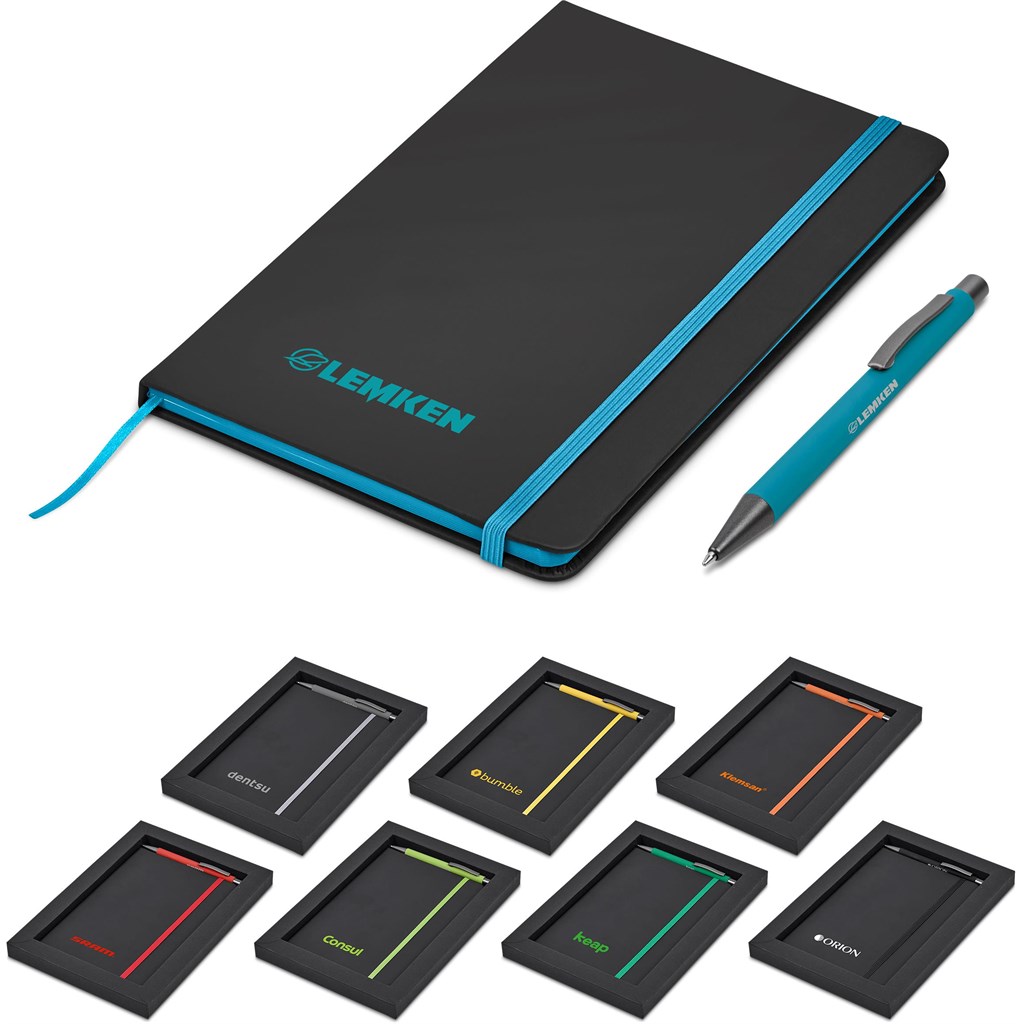
New starters take notes, a lot of them. The Altitude Miller Notebook & Pen Set pairs an A5 hard-cover notebook with a matching aluminium ball pen, supplied together in a box with a clear acetate lid. It already looks like a gift, which saves you work on presentation.
A bag
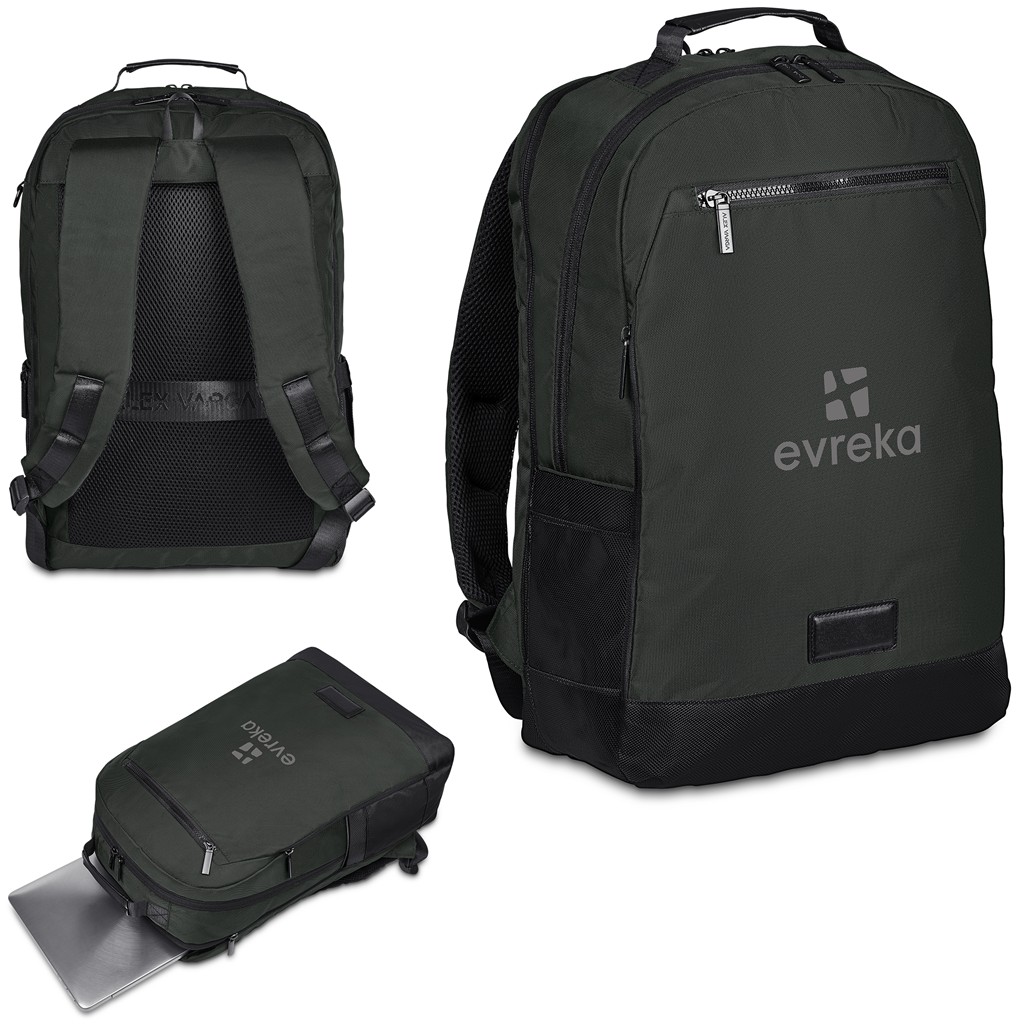
A bag matters for hybrid staff and anyone who commutes. The Alex Varga Axon Laptop Backpack has a padded compartment for laptops up to 15.6 inches, two main compartments and several internal pockets. It suits graduates and office-based roles well. See more in bags.
A tech accessory
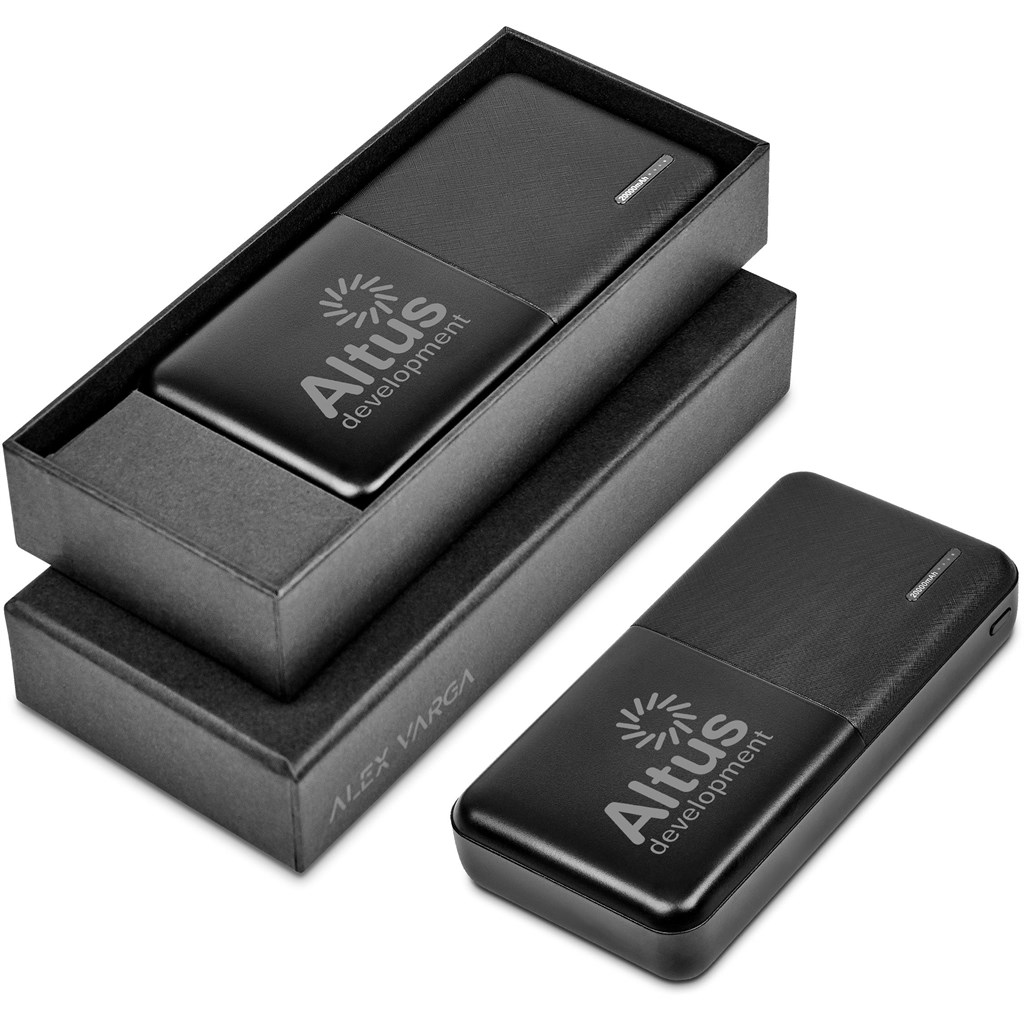
A charged phone and laptop make a first week easier. The Alex Varga Asterin Power Bank - 20 000mAh is NRCS-approved, with Type-C and micro input and an LED power indicator. It is the kind of item that ends up in a bag and stays there. More ideas sit under technology.
Apparel or workwear
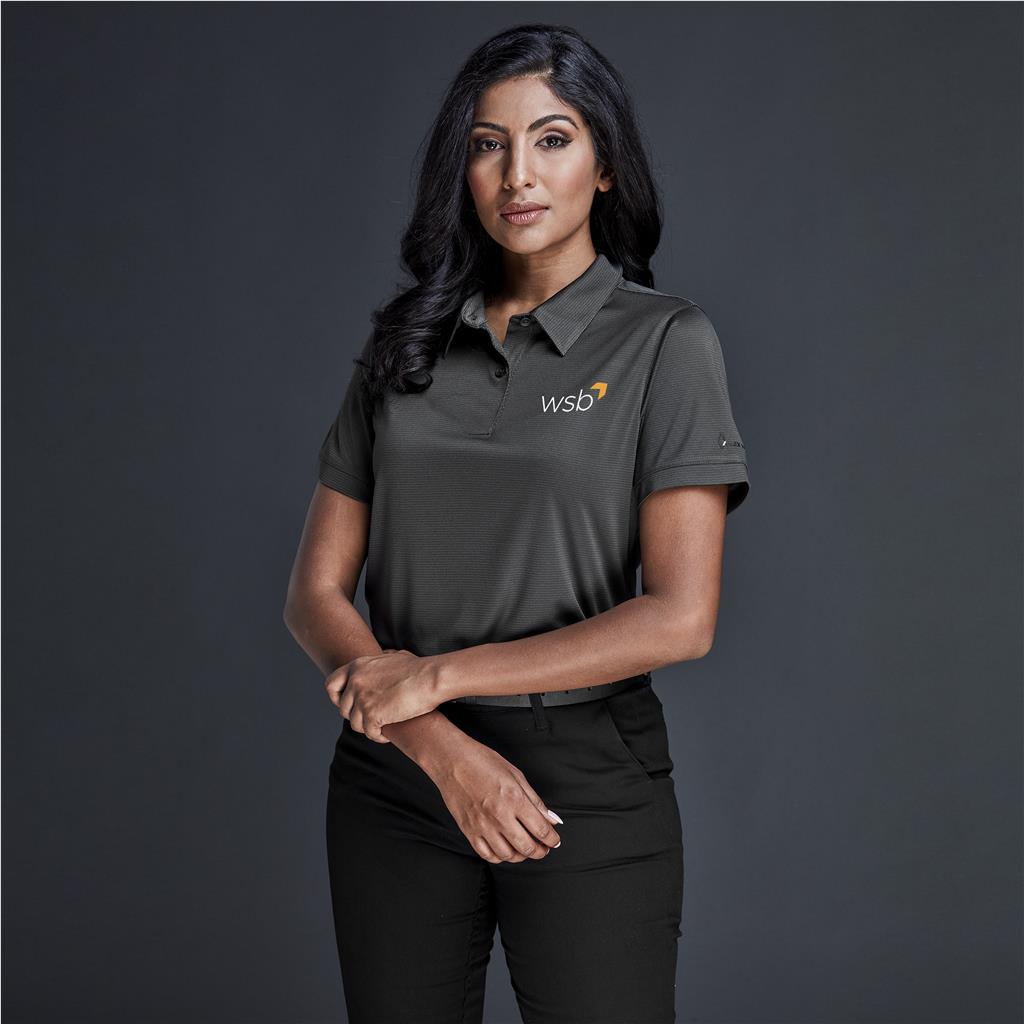
Branded workwear for new employees is often the most-used item of all, as long as it fits. A polo or golf shirt such as the Ladies Alex Varga Callidora Golf Shirt has a moisture-wicking, anti-bacterial finish and a subtle geometric pattern. Check the range for the matching cuts you need. For operational teams, start with workwear and uniforms, and for general wear look at apparel.
A personal welcome note
The cheapest item in the box is often the most remembered. A short handwritten note from the manager, mentioning the person by name and what they will be working on, costs almost nothing. Avoid pre-printed generic messages.
Don't forget the onboarding essentials
A staff induction pack is not only merchandise. Put practical information in the box, so the person is not hunting for answers on day one.
- A one-page guide: the first week at a glance, who they meet, and where to be.
- Key contacts: HR, IT, their manager, and who to call if they are running late or locked out.
- Wi-Fi and office info: network details, parking, building access and where to find the kitchen.
- A team introduction: names, roles and one fun fact each, ideally with a line on how each person can help.
Keep it to one page where you can. If it needs more, point to where the rest lives. For remote staff, send the same information digitally as well.
Tier your packs by role
One standard pack for everyone keeps things fair and simple. Then add upgrades where the role calls for it.
- Standard pack: drinkware, notebook and pen, a tech accessory and a welcome note. Add apparel or workwear if the role uses it.
- Manager upgrade: a better bag or a premium notebook set.
- Executive or specialist upgrade: an item that supports the work they do, such as travel gear or a higher-grade accessory.
Keep the core the same across tiers so nobody feels left out, and let the upgrade be an extra rather than a replacement. This also makes forecasting easier, because most of the quantity sits in one base pack.

Branding that looks good, not loud
Over-branded gifts rarely get used outside work. Keep it tasteful: one logo, one position, in a size that suits the item. Match the method to the material.
- Embroidery on apparel and caps for a durable, premium look. See embroidery.
- Laser engraving on drinkware for a permanent mark with no ink to wear off. See laser engraving.
- Digital printing on notebooks for crisp, full-colour covers. See digital printing on notebooks.
- Debossing on leather or synthetic covers for a subtle, indented finish.
Compare all the options on the branding techniques overview. Check what each product supports on its page, because not every method suits every item.
Before you order, try the free logo mockup generator to see your logo on the product. If your logo file is low resolution, read the artwork guidelines first. Low-quality artwork cannot be accepted for production, but our design studio can redraw it at a cost, quoted up front.
Sizing, personalisation and presentation
Sizing before day one
Apparel is where welcome packs most often go wrong. Collect sizes once the offer is accepted, using a short form: size, preferred fit and, if relevant, any workwear requirements. Build a note into your offer pack that explains why you are asking. Decide in advance how you will handle people who change their mind or were unsure, and order a small buffer of common sizes.
Names and initials
Adding a name or initials turns a standard item into a personal one. It suits notebooks, drinkware and bag tags especially. It also means the item cannot be reused for someone else, so confirm spelling with the new starter or their manager before it goes to production. Ask us about personalisation when you request a quote.
Presentation
How the pack arrives shapes how it is received. A tidy box, a belly band holding items together, or tissue and an insert card takes little effort. Look at belly bands and digital custom packaging if you want something made for you, and use our custom orders page for custom-made packaging or large corporate orders, which are quoted in writing.

Plan the logistics and budget
Forecast, then order in batches
Look at your hiring plan for the year. January intakes and graduate programmes are predictable, while ad hoc hires are not. A simple approach is to order the base pack for the planned intake and keep a few spare complete packs for unplanned starters. If you hire steadily, order in batches rather than all at once. Spare stock saves a last-minute scramble, but avoid over-ordering sized apparel.
Work back from start dates
Take your earliest start date, subtract the time for artwork approval, production and delivery, and add a buffer. Our order-by deadline planner does this for you, so you are not guessing. Remember that production starts after you approve the digital proof and payment has cleared. See our delivery information for courier details and tracking.
Budget by tier
Decide what each tier should include, then price them. Use the branding calculator to see live pricing with your branding positions, methods, setup and VAT. Price the standard pack first, then each upgrade as an add-on. Swap items in and out until the total fits. To compare gift-ready options, browse corporate gifts and the gift planner.
Step-by-step: build your pack
- List your roles. Write down the types of staff you hire and where they work.
- Apply the use test. Shortlist items that pass the three questions for each role.
- Choose the building blocks. Select from drinkware, notebook and pen, bag, tech, apparel and a note.
- Set your tiers. Define a standard pack and one or two upgrades.
- Add onboarding content. Draft the one-page guide, contacts and team intro.
- Mock up the branding. Use the logo mockup generator and check artwork quality.
- Price each tier. Use the branding calculator and adjust.
- Confirm sizes and names. Collect them as soon as offers are accepted.
- Approve the proof. Check spelling, positions and colours carefully.
- Work back from start dates. Use the order-by planner and book delivery before day one.
Checklist: is your welcome pack ready?
- Each item passes the use test for its role
- The pack includes real onboarding information, not only merchandise
- A personal note from the manager is included
- Logo placement is subtle and suited to each product
- Branding methods match the materials
- Artwork meets the guidelines
- Sizes and name spellings are confirmed
- Packaging or a belly band is chosen
- Spare packs are planned for unexpected hires
- Delivery dates are checked against start dates

How to tell if it's working
You do not need a survey platform. Thirty days after someone starts, ask three simple questions:
- Which items have you used, and how often?
- What was missing in your first week?
- Was there anything you didn't need?
Keep the answers short and collect them in the same way each time. Look for patterns across several new hires rather than reacting to one comment. If everyone in a role ignores the same item, replace it. If people keep asking for the same information, add it to the one-page guide.
FAQs
How many items should a welcome pack have?
Fewer than you think. Three to five useful items plus the onboarding guide and a note is a good starting point. Build up only if the use test supports it.
What should I send to remote employees?
Choose compact, courier-friendly items that are useful at home, such as a notebook and pen set, drinkware and a tech accessory. Include the welcome note and the same onboarding information as office staff.
How early should I order?
Earlier than feels necessary. Use the order-by planner to work back from the start date, and remember that production starts only after proof approval and cleared payment.
Can I order small batches?
Quantities vary by product and branding method, so check the branding calculator or contact us for what suits your numbers. For custom-made items, request a written quote.
How do I handle sizes if I don't know them yet?
Ask for sizes as soon as the offer is accepted. If a start date is close, consider sending the non-apparel items first and following up with sized items once confirmed.
Can I add names to the items?
Yes, personalisation is possible on many products. Confirm spellings with the new starter or their manager, and check with us which methods suit each item.
Next step
Once you have chosen the contents, try the free logo mockup generator to see your branding in place, and check dates with the order-by planner. Then price each tier with the branding calculator.
Products in this article
 On promotion
Shop gift sets
Price any product with branding in the calculator, see your logo on it, or send us your brief for a quote.


